Crypto Casino 101: How to Play Safely

Crypto casinos can feel confusing at first—different coins, networks, and “provably fair” tools make it hard to know where to begin.
This page is the clean starting point: what a crypto casino is, what changes versus a traditional online casino, and the exact habits that make deposits and withdrawals predictable.
Got questions? Skip to the FAQs.
Quick Start: Start Safely in 10 Minutes
Keep it simple. Your first goal is not “perfect strategy.” It’s making your first deposit and withdrawal feel boringly predictable.
- Confirm legality in your region. Don’t skip this. Rules vary, and casinos often enforce location policies.
- Pick one coin + one network. Stablecoins can be easier for beginners, but only if you match the exact chain in the cashier and your wallet.
- Use a small test deposit. First-time on a new casino or network? Test small, watch it confirm, then scale.
- Turn on basic account security. 2FA on day one. Unique password. Bookmark the real domain.
- Do a small test withdrawal early. This is the fastest way to learn the casino’s processing timing and requirements on your account.
Bottom line: start small, match coin + network, keep 2FA on, and run one test withdrawal. Those four steps prevent most “crypto casino horror stories.”
What Is a Crypto Casino?
A crypto casino is an online casino that lets you deposit and withdraw using cryptocurrency, not only cards or bank transfers. In practice, the flow is straightforward: you create an account, add funds (BTC, ETH, USDT, etc.), play your games, and withdraw to a wallet you control.
The “crypto” part matters because transactions are handled on-chain. That means you can usually track your deposit or withdrawal as a real blockchain transfer—useful for transparency, but also unforgiving if you make a mistake. Crypto transfers are typically final, so the right coin and the right network are not optional details.
New to crypto? Many platforms also offer a card on-ramp inside the cashier. It can be a convenient bridge on day one, especially if you want to learn the casino flow before you learn wallets. Just remember: for withdrawals, having a personal wallet you control is still the cleanest setup.
You’ll also see crypto-native features like “originals” (fast-paced games built for online play) and, sometimes, provably fair mechanics that let you verify game outcomes after a round. Useful tools—but they don’t replace basic trust checks on the platform itself.
Crypto vs Traditional Casinos: What Changes
Crypto casinos aren’t just “the same casino, but with Bitcoin.” A few practical differences change how you should approach deposits, withdrawals, and risk.
- Payments can move faster (depending on the casino and network load), but the casino may still have internal processing windows.
- You control the wallet setup. That’s freedom, but also responsibility—wrong network, wrong memo, wrong address can cost you.
- Fees behave differently. Some are network fees (blockchain), some are platform rules (minimums, limits, review windows).
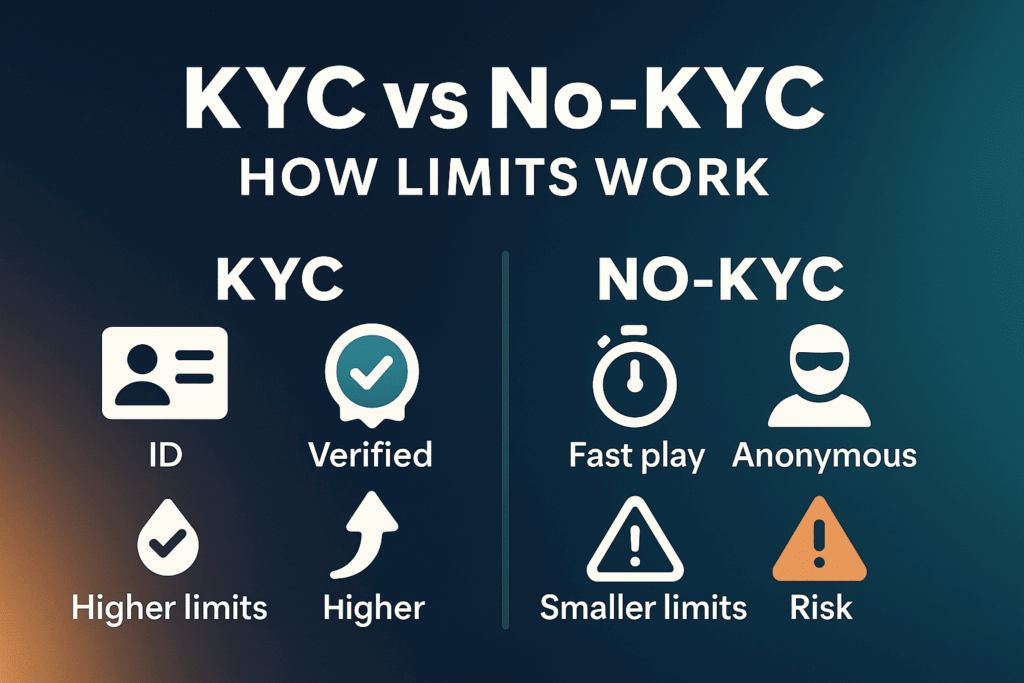
- Verification policies vary a lot. Some sites run full KYC; others allow more flexible play—but can still request checks later for compliance or unusual activity.
Rule of thumb: crypto makes transfers more transparent, but it also removes the safety rails. The fix is simple—use test transactions, keep your setup tidy, and choose platforms that publish clear rules.
Before Your First Deposit: 7 Rules of Thumb
These are small habits. They feel basic. They also prevent most of the stress.
- Start with one coin and one network you understand. Complexity is how beginners get burned.
- Always run a tiny test on a new setup. New casino, new chain, new wallet? Test small.
- Keep a fee buffer. Don’t send your entire wallet balance. Leave room for network fees and retries.
- Use 2FA and unique credentials. Treat account access like a wallet key.
- Bookmark the official domain. Avoid “support” links from DMs, random promos, or fake ads.
- Withdraw early. A small test cash-out teaches you the casino’s real timing and requirements.
- Keep it fun, keep it planned. Set limits. Take breaks. If it feels emotional, pause.
If you want a structured “trust checklist” with real red flags, go here: How to Choose a Safe Crypto Casino.
Choosing a Safe Crypto Casino
You don’t need a detective hat. Safety leaves clues—if you know where to look. Here’s the quick version.
- Licence and reputation are visible. The regulator and licence number should be published and easy to verify.
- Terms are readable. Bonus rules, limits, and timelines are explained without “gotcha” wording.
- Payments info has real numbers. Minimums, maximums, fees (if any), and processing windows are listed.
- Fairness information exists. Provider list, audits, or provably fair docs are easy to find.
- Support behaves like a real support team. Fast enough, clear enough, and reachable before you have a problem.
- Responsible gaming tools exist. Limits, reality checks, cooling-off options—basic signs of maturity.
Quick test: do a small withdrawal early. It’s the fastest way to learn how smooth the cash-out process is on your account.
Want the deeper version (including how to test a casino yourself)? Read: How to Choose a Safe Crypto Casino.
Wallets, Networks & Fees: The Minimum You Must Understand
You don’t need to become a blockchain expert. But you do need to understand a few “minimum vital” concepts that protect your deposits and withdrawals.
1) Coin vs network (the most expensive beginner mistake)
The same coin can exist on different networks. Stablecoins are the classic example. USDT on one network is not the same as USDT on another network. Your casino cashier and your wallet must match the exact chain every time.
2) Custodial vs non-custodial (who holds the keys?)
A custodial wallet (exchange or in-app) is convenient on day one, but the provider controls the private keys and may apply rules at withdrawal. A non-custodial wallet gives you full control—plus full responsibility. If you go non-custodial, keep your seed phrase offline and never share it.
3) Memo / tag (when required)
Some networks require an extra identifier (memo/tag). If the cashier asks for it, include it. Missing a memo is one of the fastest ways to turn a “simple deposit” into a support ticket.
4) Fees and timing
Fees can come from two places: the network (blockchain) and the platform’s rules (minimums, limits, processing windows). Timing also has two layers: network confirmations and the casino’s internal approval steps.
Practical tip: if a transaction feels slow, don’t panic. Track it using the transaction hash (TXID) in a block explorer. For Ethereum-based transactions, you can paste the TXID into Etherscan.
For a step-by-step walkthrough (plus a “mistakes to avoid” section), use: Crypto Casino Wallets: How to Deposit and Withdraw Safely.
| Option | Why people use it | Watch out for |
|---|---|---|
| BTC | Broadest support across casinos | Fees and speed vary with network traffic |
| ETH / ETH-based | Common support, lots of ecosystem tools | Confirm the exact chain (mainnet vs L2) in the cashier |
| USDT / USDC | Stable balance (less price swing) | Network matching matters more than the ticker |
Deposits & Withdrawals: Step-by-Step
The goal is simple: match the right coin and the right network, start with a small test, and make confirmations boring. If you want the full step-by-step (with screenshots and a real-world test), use the wallet guide: Crypto Casino Wallets.
How to deposit
- Open “Deposit” in the casino cashier.
- Pick the coin and network shown in the cashier (this is the important part).
- Copy the address (and memo/tag if shown). Paste it carefully in your wallet.
- Send a small test and wait for confirmations. Your balance updates once the network confirms.
How to withdraw
- Check requirements (minimum withdrawal, processing window, potential verification rules).
- Pick your coin and network and paste your receiving wallet address.
- Confirm security steps (2FA, email confirmation, etc.).
- Track the payout once the transaction is sent (TXID if provided).
Common mistakes to avoid
- Wrong chain for the right coin. Matching the ticker is not enough—match the network.
- Missing memo/tag. If the cashier asks for it, include it.
- No fee buffer. Don’t empty your wallet to the last cent.
- Reusing old details. Deposit addresses and accepted networks can change. Copy the current one each time.
- Panicking during confirmations. Busy networks can take longer. Track the TXID and let it settle.
Quick test: do a small withdrawal early in your journey. It teaches you the exact timing on your account.
Games & Fairness: RTP, Volatility & Provably Fair
Most crypto casinos offer the classics—slots, blackjack, roulette, baccarat—plus a live dealer lobby. You’ll often see “originals” built for speed and transparent mechanics (crash, dice, plinko-style games, mines, and more).
RTP in plain English
RTP (Return to Player) is the long-term theoretical percentage a game returns across a very large number of bets. It’s not a promise for your session. It’s a baseline for understanding house edge.
Volatility (why wins can feel “rare” or “steady”)
Volatility is how a game distributes its payouts. Low volatility tends to pay smaller wins more often. High volatility tends to pay less often, but with bigger spikes. Your bankroll and mood should match the volatility, not fight it.
Provably fair (what it is, and what it isn’t)
Provably fair systems use seeds and public algorithms so you can verify outcomes after a round ends. It’s a nice transparency tool for certain game types. But it doesn’t replace basic trust checks: payouts, rules, support quality, and account security still matter.
Beginner move: test a couple of demo games first. Five minutes of testing teaches you more than a long review—especially for pace, bet sizing, and volatility.
Live Casino Game Shows
Live game shows sit between casino play and TV entertainment: bright studios, a host, a fast tempo, and crowd energy. They can be fun, but they also make it easy to play longer than planned—especially when bonus rounds and multipliers hit.
If you’re curious, use the dedicated deep dive: Live Casino Game Shows: The Complete 2025 Player Guide. It covers how these shows work, how to choose a casino for them, and habits that keep sessions under control.
Bonuses & Wagering 101: When to Take It (and When to Skip)
Bonuses are optional power-ups. They can add value—or add friction. The trick is choosing offers that match how you actually play. If a promo slows you down, skip it and play cash.
Common bonus types (quick overview)
- Matched deposit: extra bonus funds added when you deposit.
- Free spins: usually tied to slots and specific game providers.
- Cashback / rakeback: clearer value, usually easier to understand.
- VIP / loyalty: perks for consistent play—check conversion rates and withdrawal terms.
- Tournaments / races: leaderboard rewards tied to volume or performance during a time window.
What wagering requirements really mean
Wagering is the total amount you must bet before bonus funds become withdrawable. Example: a 30× requirement on a $100 bonus means you need $3,000 in eligible bets. You don’t need to lose $3,000—you need to place bets that add up to that total on eligible games.
The “30-second check” before you opt in
- Eligible games (slots only? live excluded?)
- Contribution rules (some games count less)
- Max bet while wagering
- Time limit / expiry
- Any win cap or max cashout
- Wallet order (real funds first vs bonus funds first)
Rule of thumb: if you can’t understand the core rules in 60 seconds, the offer is probably not designed for clarity.
Want to browse current promos across brands? Check the Bonus Hub.
Security & Responsible Play
Treat your casino account like a wallet key. A few habits remove most risk and make payouts smoother.
Account security basics
- Enable 2FA (authenticator app is better than SMS when possible).
- Use a dedicated email and unique password (a password manager helps).
- Bookmark the official domain and avoid “support” links from random messages.
- Use withdrawal protections if available (address whitelist, time-lock, etc.).
Geo notes and verification reality
Casinos may apply location restrictions and verification policies. Read the rules before you deposit. VPN use can violate terms and cause withdrawal problems. Some operators may request verification later in case of compliance reviews or unusual activity.
Responsible play
Gambling should stay fun. Set limits, take breaks, and only play what you can afford to lose. If it stops feeling fun, step away.
If you want confidential support, you can start here: Gambling Therapy.
Next Steps (Deep Dives)
If you want to go from “beginner” to “confident,” these three pages cover the rest of the story.
- Pick a trustworthy platform: How to Choose a Safe Crypto Casino
- Set up wallets, deposits, withdrawals, and avoid common mistakes: Crypto Casino Wallets: How to Deposit and Withdraw Safely
- Explore live game shows (if that’s your thing): Live Casino Game Shows: The Complete 2025 Player Guide
When you’re ready to explore brands and offers, you can browse: Brands that stand out and check live promos in the Bonus Hub.
Quick recap: start small, match coin and network, keep 2FA on, and stick to games and offers that match your plan. If it stops being fun, take a break and come back later.
Disclaimer: This guide is for informational purposes only. Always verify local laws, operator terms, and your own risk limits before playing.
FAQ
Often minutes to a few hours, depending on network traffic and the casino’s processing window. The most reliable answer is a small test cash-out on your account.
It means game outcomes can be verified using seeds and a public algorithm after a round ends. It’s a transparency tool for certain games, not a complete safety guarantee for the platform.
Stablecoins on low-cost networks are often cheap and fast, but support varies by casino. Always confirm the exact chain in the cashier and in your wallet before sending.
Yes. Crypto transfers are usually final. Match coin + chain, and include any memo/tag if required.
Not always. Some casinos go further and advertise no-KYC with unlimited withdrawals. It usually means they allow crypto-only play and trust wallet signatures for verification instead of ID checks. Still, every operator reserves the right to ask for KYC later in case of unusual activity or compliance audits. Take those claims as flexibility, not as a promise of total anonymity. For the full safety breakdown, read: How to Choose a Safe Crypto Casino.
One coin, one network, 2FA on, small test deposit, then a small test withdrawal early. For the full step-by-step, use: Crypto Casino Wallets.
It depends on where you live. Always check local laws and the casino’s geo rules before you play.